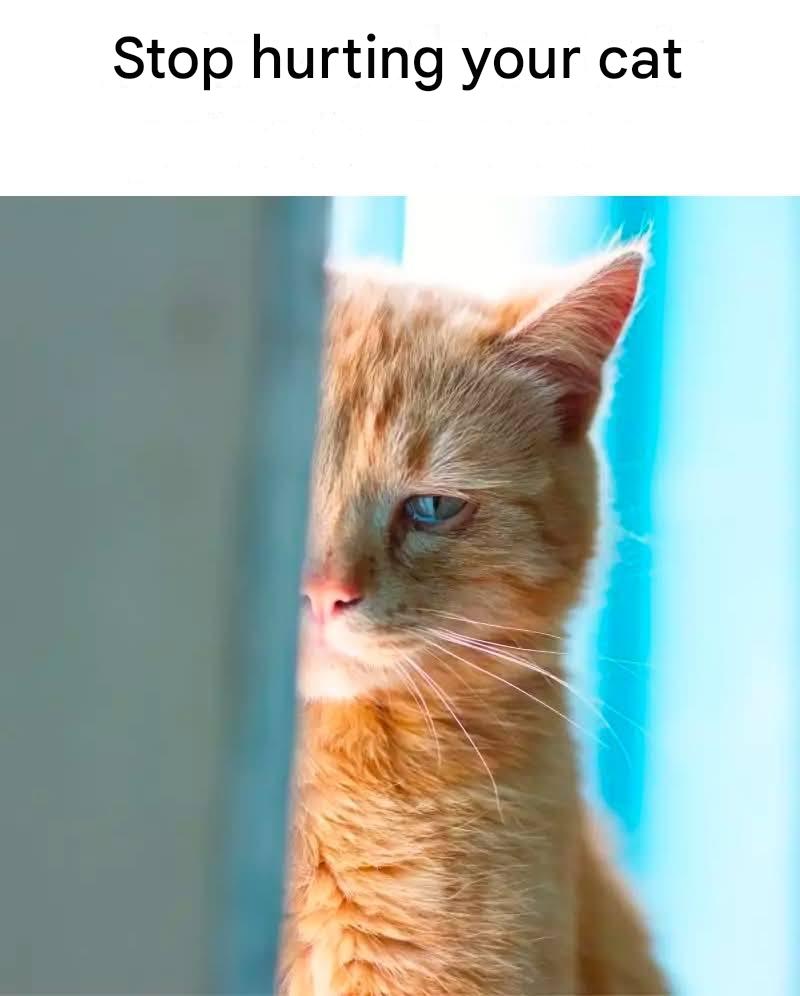
Shouting:
Loud voices will terrify your cat. Feline ears are extremely sensitive to loud, high-pitched noises. They may perceive the person making these noises as a threat and will begin to avoid them. Remember that yelling at your cat will damage your bond with your pet and cause them to associate negative emotions with you. Ignoring their fears:
Cats have good reason to jump and hide whenever they hear a loud or startling sound. Our feline friends can hear sounds approximately 1.6 octaves higher than humans. Common sounds such as vacuum cleaners, video games, fireworks, balloons, or loud televisions can cause stress and anxiety in cats. Flattened ears, a low tail, an arched back, and searching for a place to hide are all signs that your cat is uncomfortable in a particular situation.
Keep in mind that it's part of a cat's survival instinct to be afraid of loud noises. Make sure you provide your cat with a calm and relaxed environment that helps them feel safe at home.
Forcing them into new interactions:
Most cats are reserved with strangers. They aren't particularly trusting and prefer to make introductions at their own pace. When you force your cat to interact with new people, you're being disrespectful of their feelings. It's always best to let your cat make new friends at their own speed. Don't force them to interact, and tell others to respect their space and feelings.
Leaving a litter box dirty:
Using a dirty bathroom is never a pleasant experience, and it shouldn't be surprising if your cat feels the same way about its litter box. Cats are very clean animals and spend a large part of their day grooming themselves. If their litter box isn't clean enough, cats may decide to relieve themselves outside of it. Cleaning your cat's litter box every day will make your cat happy and show it that you understand and respect its needs.
Ignoring their pain:
Cats don't speak human language, so pet owners often need to decipher clues about their cat's condition based on physical and behavioral changes. Whether it's an infected tooth making it difficult to eat or a urinary tract infection making litter box visits painful, it's up to us to recognize the subtle signs and provide the help they need.
Monitoring your pet's well-being means being a pain detective to know if something is hurting your cat.
Don't neglect cleaning your cat's food and water bowls.
Cats need fresh food and clean water every day. Forcing your cat to drink from a dirty bowl will make them upset, anxious, and stressed. It can also lead to health problems due to harmful bacteria that can grow in their food bowl. The same applies to their food bowl.