5. Lack of motivation.
Psychological and emotional changes can also lead to leg weakness. Retirement, depression, or the loss of a loved one can reduce motivation for physical activity.
If your routine changes after work, you may be less active, which can lead to weakness. It's important to seek help and build a support network.
Exercising with a friend, joining a senior fitness group, or getting support from family can give you encouragement and a sense of community that will help you stay active.
Important Instructions:
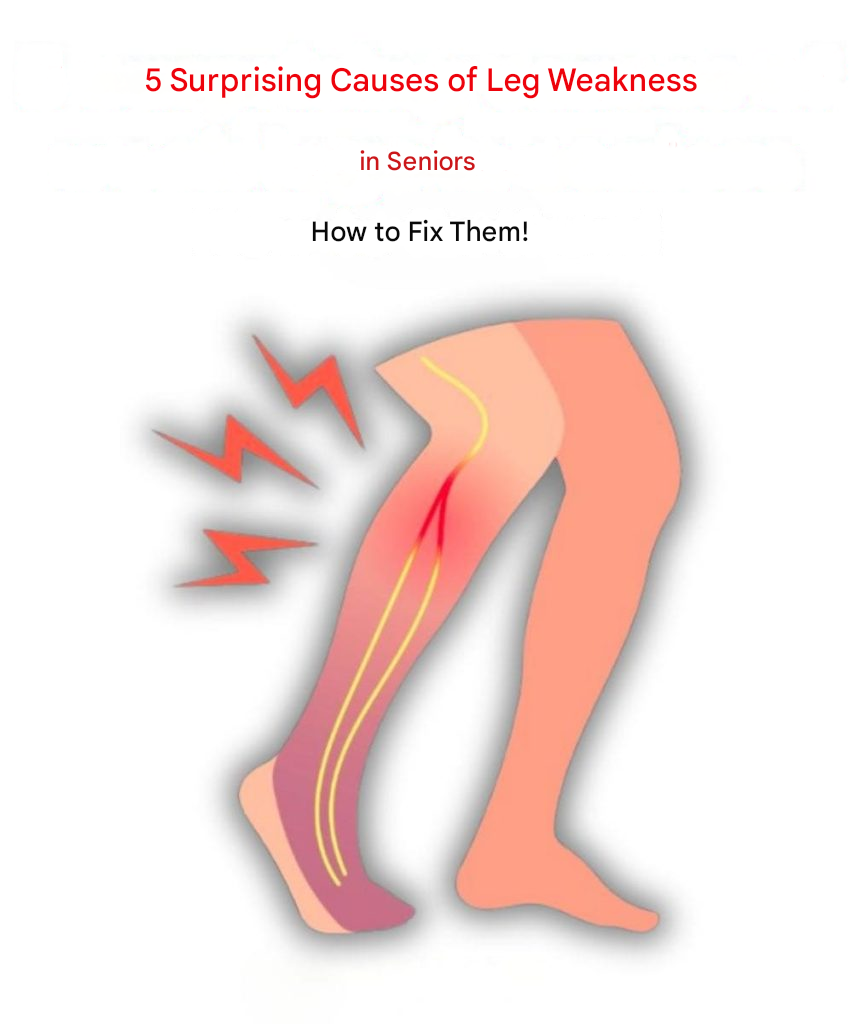
Although leg weakness is common in older age, it is often reversible. Regular exercise is the best defense against muscle loss and related problems.
Treating chronic health conditions and taking care of your back are also important. Finally, emotional support and motivation play a crucial role.
Simple exercises for home
Getting up from a chair: Practice slowly standing up and sitting down to strengthen your leg muscles. If this is difficult, use a higher chair or place a cushion on the seat and gradually increase the exercise until you can do it hands-free.
Lunges: This exercise works each leg individually and challenges your balance. Take a step forward, gently lower your back knee, and push yourself back up. Hold on to something if necessary.
Walking: Walking is simple but effective. Start on a level surface and use a cane or walker if necessary. Gradually increase the difficulty and try small hills or paths once you feel confident.
Always remember: any movement is better than none, and regularity is the key to strong legs and greater independence in old age. If you're not sure where to begin, don't hesitate to ask a doctor, physical therapist, or a friend for advice. You won't regret it!