Trick to Make Your Peace Lily Grow Unstoppably (And What Sellers Won’t Tell You)

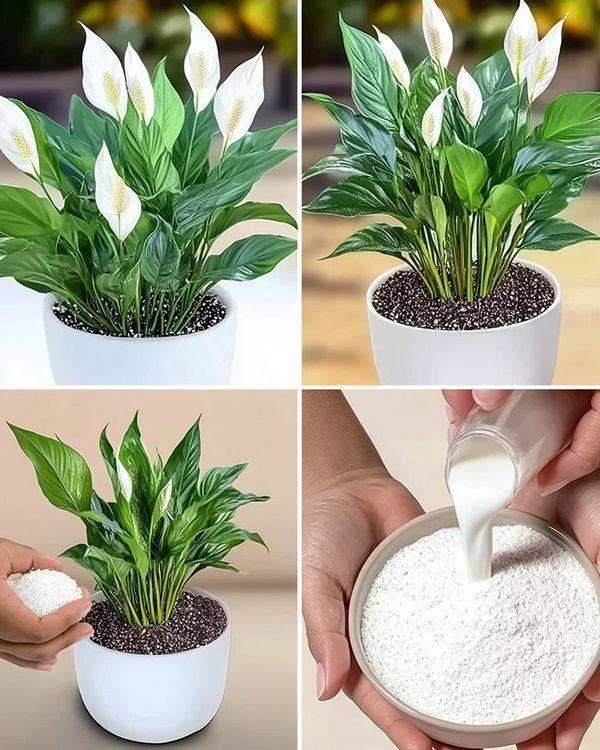
In addition, misting the leaves occasionally helps mimic their natural environment. I like to mist mine every few days, especially during dry winter months when indoor heating lowers humidity levels.
Repot When It’s Root-Bound
Peace lilies are fast growers, and before you know it, they’ll outgrow their pots. I repot mine every 1–2 years, or whenever I see roots poking out of the drainage holes.
To repot, you need to choose a pot that’s one size larger than the current one, then use a blend of regular potting soil and perlite to ensure the roots don’t sit in water.
Next, you gently loosen the root ball and remove any dead or mushy roots before placing the plant in its new pot. Finally, you water thoroughly and keep it in a shaded spot for a few days to reduce transplant shock.
Pruning for Health and Beauty
Occasionally, peace lilies develop yellowing or browning leaves. This is normal and you can prune them to redirect its energy to new growth.
Use clean scissors or pruning shears to cut off damaged leaves at the base. I like to prune mine during spring or early summer when the plant is actively growing.
Bonus Tips for Thriving Peace Lilies
- Feed regularly: Beyond milk fertilizer, you can use a balanced liquid fertilizer once a month during the growing season (spring and summer).
- Keep the leaves clean: Dust can accumulate on the leaves and block light absorption. I wipe mine with a damp cloth every couple of weeks.
- Temperature matters: You should keep your peace lily in a room that stays between 65–80°F (18–27°C). Avoid placing it near cold drafts or heaters.
Common Problems and Solutions
Drooping leaves are usually a sign of underwatering or overwatering. Check the soil moisture and adjust your watering routine.
Besides, you can see brown tips which could be due to low humidity or fluoride in tap water, so you can use distilled or rainwater, and increase humidity.