Improved mood and mental health
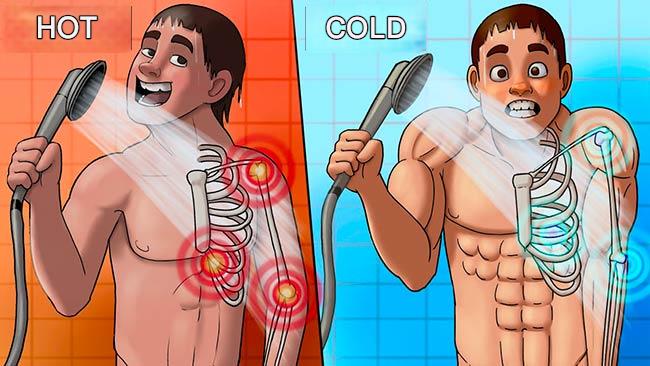
Cold therapy can significantly improve your mood and mental health, to the point of potentially helping to prevent and treat depression. When exposed to cold temperatures, the body rapidly releases norepinephrine into the bloodstream. This neurotransmitter is associated with alertness, attention, concentration, and mood. Several studies, in both mice and humans, have demonstrated that cold exposure increases norepinephrine levels. A study published in the journal Neuropsychiatric Disease and Treatment showed that norepinephrine depletion leads to depression, thus explaining why ice baths and cold showers can help prevent and treat depression.
To obtain these benefits, the temperature must be sufficiently low. One study showed that a one-hour immersion in 14°C water did not increase norepinephrine levels, while an hour in 13.9°C water increased them by 530%. Fortunately, similar benefits can be obtained in a shorter time if the temperature is even lower. For example, a 20-second immersion in 4.4°C water, repeated three times a week for 12 weeks, increases norepinephrine levels by 200 to 300%.
Reduction of inflammation
Chronic inflammation is associated with many modern diseases, such as heart disease, diabetes, cancer, arthritis, and inflammatory bowel disease. Cold therapy may reduce overall inflammation in the body. A study of people aged 85 to 110 showed that low inflammation levels predicted survival and cognitive function. Reducing inflammation could therefore prolong life and lower the risk of chronic diseases.
Norepinephrine inhibits inflammatory pathways by decreasing levels of TNF-alpha, a protein implicated in almost all human diseases. It also reduces other inflammatory molecules such as MIP-1 alpha. Furthermore, by lowering body temperature, blood vessels constrict, which can help reduce inflammatory markers.